



Talk to a doctor about a plan
- A BRCA1 or BRCA2 gene change, or Lynch syndrome
- A mother, sister or daughter with ovarian cancer
- Several close relatives with breast or ovarian cancer
- A known ovarian cyst that needs assessing
10 Street Name, City Name
Country, Zip Code
555-555-5555
myemail@mailservice.com
Ovarian cancer screening means testing for ovarian cancer before symptoms appear, but for women at average risk there is currently no screening test proven to save lives. At Sinsoe Women's Clinic in Gangnam, Seoul, female OB-GYNs use pelvic ultrasound and the ROMA blood test (CA-125 plus HE4) to check women with symptoms, a known cyst, a high-risk family history or who want a check-up, and explain clearly what the results can and cannot tell you. ROMA is ₩80,000 and a GYN ultrasound ₩100,000 from the clinic's published fee schedule (June 2026); confirm before your visit. An English-speaking coordinator helps throughout.
Ovarian cancer is often found late because early symptoms are vague. That is why women ask about screening. The two main tools are a transvaginal ultrasound of the ovaries and blood tests such as CA-125.
Large studies in women at average risk found that yearly ultrasound and CA-125 did not reduce deaths from ovarian cancer and led to some unnecessary surgery. So no major guideline recommends routine screening for women without symptoms or high risk.
These tests are still very useful in the right situations: checking symptoms, assessing an ovarian cyst, and monitoring women at high risk, such as BRCA carriers. The ROMA test combines CA-125 and HE4 with your menopause status to estimate the risk that a pelvic mass is cancer.
Testing is most useful when your risk or your symptoms are higher than average.
Message us on WhatsApp for a prompt appointment. These symptoms are usually caused by something else, but they need checking.
Your doctor chooses the combination that fits your reason for testing.
Shows the ovaries in detail and checks any cyst for size, solid parts and blood flow. See GYN ultrasound.
Every assessmentMeasures CA-125 and HE4 and calculates a risk score based on whether you are before or after menopause. Most useful when a mass has been found.
Assessing a cystIf you have a strong family history, your doctor can talk about BRCA testing and refer you to a hospital specialist for a high-risk plan.
Family historyOne visit covers the scan, the blood test and a talk about what the results mean.
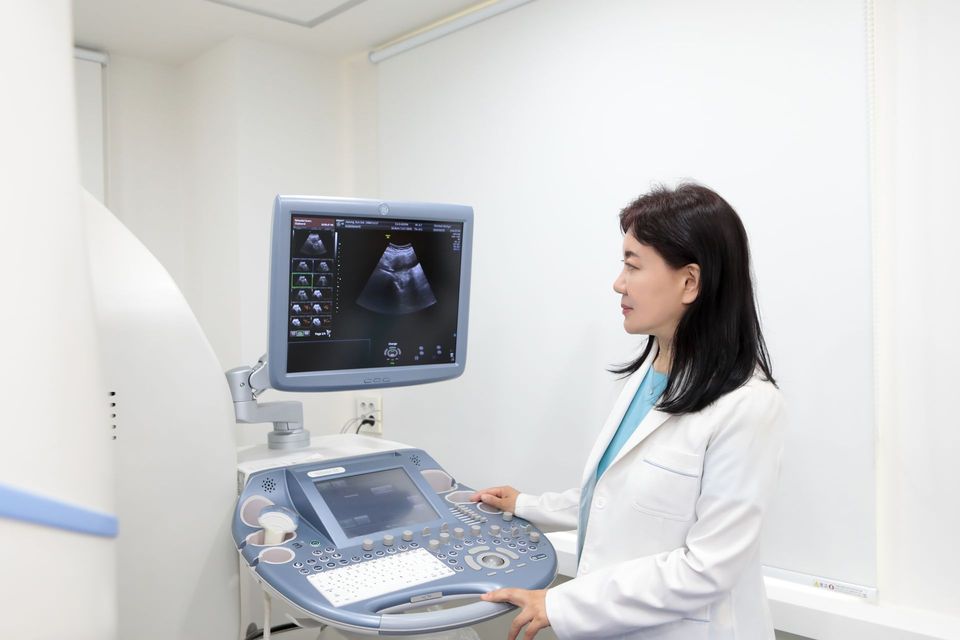

CA-125 is raised in many benign conditions, such as endometriosis, fibroids, infection and periods. Some early cancers do not raise it.
That is why results are always read together with the ultrasound, your age and your history, never on their own.
Most results are normal or show benign changes. Here is what usually happens next.
Reassuring, but report new symptoms promptly. Your doctor suggests when to check again if you are high risk.
Often rechecked after a few cycles. See ovarian cyst treatment.
Your doctor looks for benign causes and may repeat tests or add imaging.
You are referred promptly to a hospital gynecologic oncology team, with an English report.
False alarms can cause worry and extra tests. Your doctor helps you weigh this before testing.
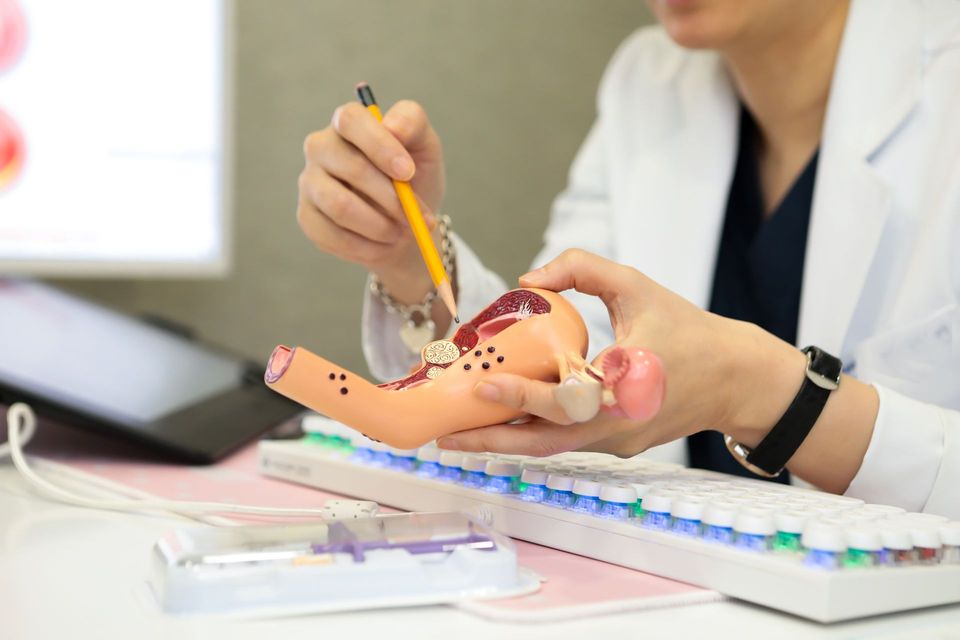
You can get a clear check during your time in Seoul and take the results home.
Bring your Alien Registration Card. If you are high risk, your scans and blood tests are tracked at the same clinic.
Bring your passport. The scan is explained the same day. Ask the coordinator how to receive your blood test result if you leave Seoul first.
Ask for an English medical certificate and your results so your home doctor can continue follow-up.
Sinsoe Women's Clinic at 537 Nonhyeon-ro, Gangnam-gu, Seoul offers pelvic ultrasound and the ROMA blood test with female OB-GYNs and an English-speaking coordinator. It is a 4-minute walk from Eonju Station Exit 7 (Line 9). Book on WhatsApp at +82-10-9517-5719.
Not for women at average risk. Studies have not shown that yearly ultrasound or CA-125 saves lives in women without symptoms. The tests are useful for symptoms, cysts and high-risk women.
From the clinic's published fee schedule (June 2026), the ROMA test (CA-125 + HE4) is ₩80,000 and a GYN ultrasound is ₩100,000. Confirm before your visit.
ROMA combines two blood markers, CA-125 and HE4, with your menopause status to estimate the risk that a pelvic mass is ovarian cancer.
No. CA-125 is often raised by endometriosis, fibroids, periods, infection or pregnancy. Your doctor reads it together with your scan.
No. A Pap smear checks the cervix only. It does not test the ovaries.
Talk to a doctor about a high-risk plan. Ultrasound and CA-125 may be used, and risk-reducing surgery is often discussed with a specialist. Your doctor can refer you.
Persistent bloating, pelvic or belly pain, feeling full quickly and needing to pee more often. If these last more than 2 to 3 weeks, get checked.
Tell us why you'd like a check, in English. A coordinator books you a time with a female OB-GYN.
| Mon & Fri | 10:00 AM – 8:00 PM |
|---|---|
| Tue, Wed, Thu | 10:00 AM – 7:00 PM |
| Saturday | 10:00 AM – 4:00 PM |
| Sunday | Closed |