



Exam, swabs and Pap
A pelvic exam, swabs for infection and a Pap smear with HPV test check the cervix and vagina.
Bleeding after sex10 Street Name, City Name
Country, Zip Code
555-555-5555
myemail@mailservice.com
Abnormal uterine bleeding is bleeding that does not fit your normal period, such as spotting between periods, bleeding after sex, or any bleeding after menopause. At Sinsoe Women's Clinic in Gangnam, Seoul, a female OB-GYN finds the cause with a pelvic exam, ultrasound, Pap and HPV tests and, when needed, a sample of the womb lining. Most causes are benign, but bleeding after menopause should always be checked. An English-speaking coordinator stays with you throughout.
Any bleeding from the vagina that is outside your usual period is worth noting. This includes spotting between periods, bleeding after sex, bleeding while on hormones that does not settle, and any bleeding after menopause.
Common causes are hormonal changes, the pill or an IUD, polyps on the cervix or in the uterus, fibroids, infections such as chlamydia, and changes on the cervix. Early pregnancy can also cause bleeding.
A diagnosis follows clear steps, from simple tests to more detailed ones. Most women get an answer quickly, and most causes are easy to treat.
When and how you bleed helps your doctor choose the right first test.
| Type of bleeding | Common causes your doctor checks |
|---|---|
| Spotting between periods | Ovulation spotting, hormones or the pill, polyps, infection. |
| Bleeding after sex | Cervical polyp, infection such as chlamydia, cervical ectropion or changes on the cervix. |
| Bleeding after menopause | Thin, dry tissue, polyps or a thickened lining. Always needs a check to rule out cancer. |
| Bleeding on the pill, IUD or implant | Often normal in the first months, but persistent bleeding is worth checking. |
| Bleeding with a positive pregnancy test | Needs a same-day check to look at the pregnancy and its location. |
Message us on WhatsApp. If it is an emergency, go to the nearest hospital emergency room.
Your doctor starts with the simplest tests and adds others only if needed.
A pelvic exam, swabs for infection and a Pap smear with HPV test check the cervix and vagina.
Bleeding after sexA transvaginal scan shows polyps, fibroids and the thickness of the womb lining. See GYN ultrasound.
Most bleeding typesIf the lining looks thick or the bleeding continues, a small tissue sample or a look inside the uterus with a thin camera may be advised.
After menopauseMany tests are done in one visit. Your doctor explains why she suggests each one.

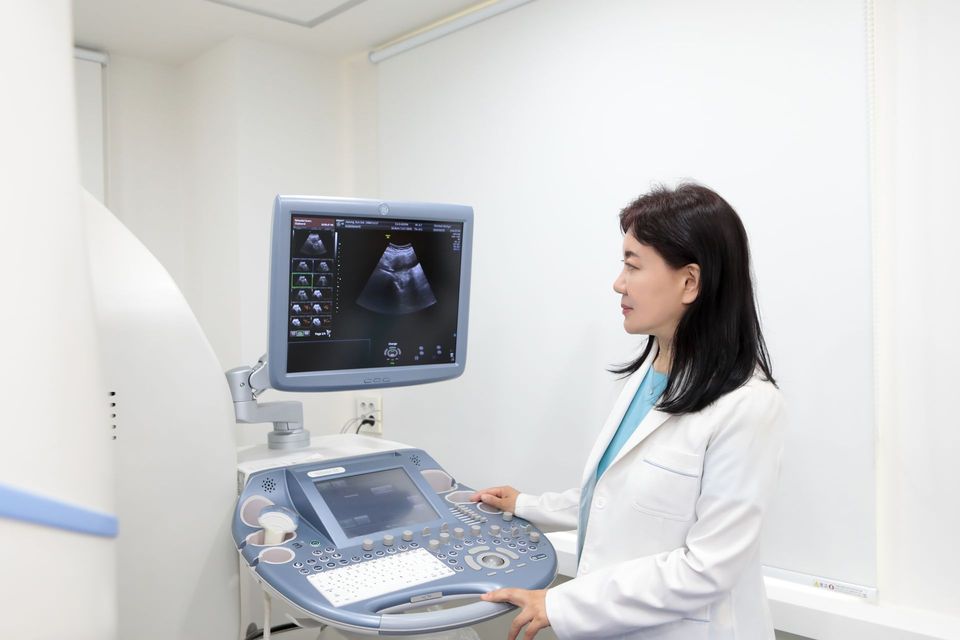
Yes. You do not need to wait for the bleeding to stop. An ultrasound can still be done. If a Pap test is needed, your doctor may suggest timing it outside heavy bleeding for a clearer sample.
Avoid vaginal creams and douching for 48 hours before your visit if you can.
Most findings are benign and simple to treat. Here is what usually happens next.
Usually removed in a short procedure and checked in the lab. See uterine polyp removal.
Treated with medicine. Partners may need treatment too. See STD testing.
Hormone treatment or a change of contraception often settles it.
A tissue sample, hysteroscopy or further cervical tests are arranged, and you are referred if specialist care is needed.
Tests such as a lining sample can cause cramping and light bleeding for a day or two, and carry a small risk of infection. Your doctor explains this before any procedure.
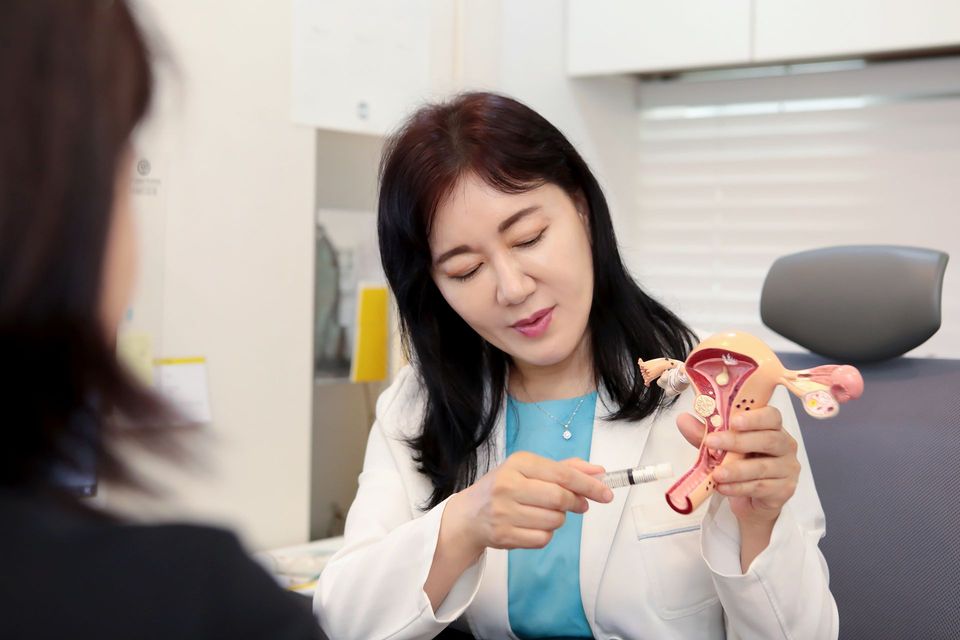
Unexpected bleeding is worrying, especially far from home. We make the process clear.
If a polyp or cervical change needs treatment, we plan it with you and keep your records.
Lab results can be sent to you on WhatsApp, even after you leave Seoul.
Ask for English results or a medical certificate to share with your doctor at home.
Sinsoe Women's Clinic is at 537 Nonhyeon-ro, Gangnam-gu, Seoul, a 4-minute walk from Eonju Station Exit 7 (Line 9). All doctors are female, and an English-speaking coordinator helps you from booking to results. Message us on WhatsApp at +82-10-9517-5719.
Light spotting around ovulation or in the first months on the pill can be normal. Spotting that keeps happening, or is new, should be checked.
Common causes are a cervical polyp, an infection such as chlamydia, or a sensitive area on the cervix. A pelvic exam, swabs and a Pap and HPV test usually find the reason.
It is often caused by thin, dry tissue or a polyp, but it must always be checked, because it can be an early sign of endometrial cancer.
It depends on the tests you need. From the clinic's published fee schedule (June 2026): gynecologic ultrasound ₩100,000, liquid-based Pap ₩50,000, HPV DNA test ₩80,000, STD 12-pathogen PCR ₩100,000. Confirm before your visit.
Not always. A sample of the womb lining is usually suggested if the lining looks thick, you are over about 45, or bleeding continues despite treatment.
Yes, especially in the first 3 to 6 months. If it continues or changes, your doctor checks for other causes.
Ultrasound findings are explained the same day. Swab and Pap results usually take a few days and are shared on WhatsApp.
Tell us when the bleeding happens and the day you'd like to come. A coordinator replies in English.
| Mon & Fri | 10:00 AM – 8:00 PM |
|---|---|
| Tue, Wed, Thu | 10:00 AM – 7:00 PM |
| Saturday | 10:00 AM – 4:00 PM |
| Sunday | Closed |