



Physical changes
- Hot flushes and night sweats
- Irregular, heavier or lighter periods
- Vaginal dryness and pain during sex
- Needing to pee often, or leaking
- Joint aches and dry skin
10 Street Name, City Name
Country, Zip Code
555-555-5555
myemail@mailservice.com
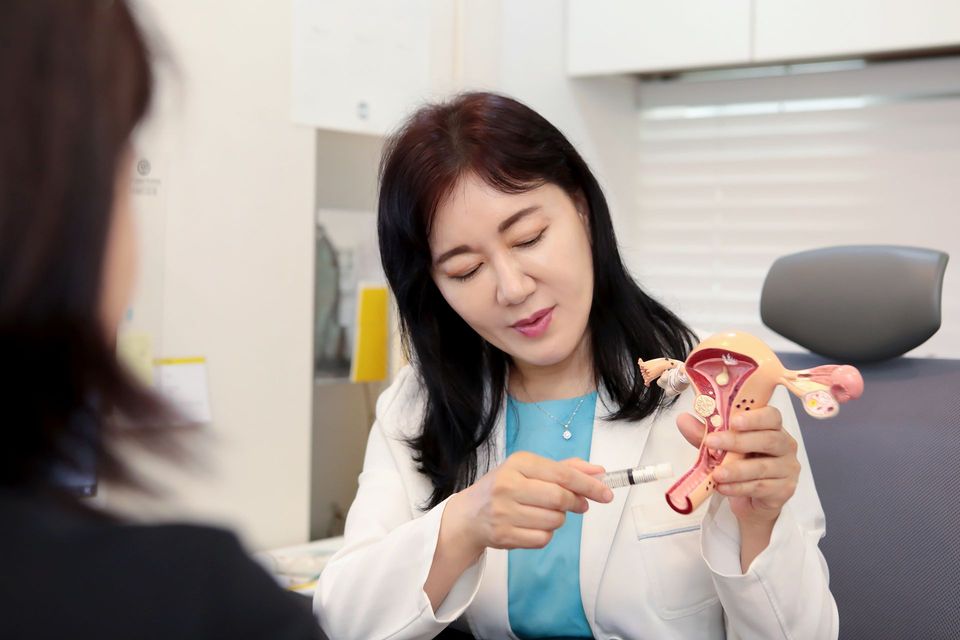
Menopause therapy is care that helps you through the change: easing symptoms such as hot flushes, poor sleep and vaginal dryness, and protecting your bones, heart and breasts for the years ahead. At Sinsoe Women's Clinic in Gangnam, Seoul, a female OB-GYN reviews your symptoms, arranges the right check-ups and talks through all options, from lifestyle changes to hormone therapy. A DXA bone density scan can be done on site, with the result in about 10 minutes. An English-speaking coordinator supports you throughout.
Menopause is your last period, confirmed after 12 months without one. The years around it, called perimenopause, can bring irregular periods, hot flushes, night sweats, mood changes, poor sleep and vaginal dryness.
Menopause therapy looks at more than symptoms. Lower estrogen also affects your bones, heart, bladder and skin, so good care includes check-ups that catch problems such as osteoporosis early.
Treatment is personal. Some women only need advice and a check-up plan. Others benefit from hormone replacement therapy or treatment for one specific symptom.
Most women first notice changes in their mid to late 40s. You don't have to put up with symptoms that affect your life.
These need checking, even if you feel well. Message us on WhatsApp to book an early appointment.
Your doctor explains the benefits and risks of each option and helps you choose. Many women combine them.
Advice on exercise, calcium and vitamin D, sleep and weight, plus a check-up plan for bones, breasts and heart. See breast exam.
Every womanEstrogen, with a progestogen if you have a uterus, as tablets, patches or gel. The most effective treatment for hot flushes. See HRT.
Hot flushes, sleepVaginal estrogen, the MonaLisa Touch laser or growth-factor injections for dryness, and pelvic exercise guidance for bladder control.
Dryness, leakingA first visit usually combines a consultation, tests and a plan in one day.
Bone loss speeds up in the years after menopause and causes no symptoms until a bone breaks. A DXA scan measures bone density with a very low dose of X-rays while you lie still for a few minutes.
Sinsoe uses a QUANTUM DXA scanner, and the result is usually ready in about 10 minutes, so your doctor can discuss it in the same visit.
These help find problems early. Your doctor adjusts them to your age, history and what was done recently.
Recommended around menopause, especially with risk factors such as early menopause, low body weight or smoking. Result in about 10 minutes.
Korea's national program offers a mammogram every 2 years from age 40. Breast ultrasound is often added for dense breasts.
Checks for fibroids, polyps and ovarian changes, and screens for cervical cancer.
Thyroid problems can feel like menopause, and heart and metabolic risks rise after it, so a baseline helps.
Women's health screening packages, with radiologist reading, are also available. Ask the coordinator.
You don't need Korean insurance or Korean language skills. Here is what helps, depending on your situation.
Menopause care works best with regular reviews. Bring your Alien Registration Card, and we keep your records from year to year.
Bring your passport. Consultation, ultrasound, DXA and breast imaging can often be arranged on the same day. Message us your dates.
Bring the names and doses of your current medicines. Your doctor reviews them and, if suitable, prescribes what is available in Korea.
Sinsoe Women's Clinic at 537 Nonhyeon-ro, Gangnam-gu, Seoul offers menopause care, bone density scans and breast imaging with female doctors and an English-speaking coordinator. It is a 4-minute walk from Eonju Station Exit 7 (Line 9). Book on WhatsApp at +82-10-9517-5719.
The average age is around 50, and most women reach it between 45 and 55. Perimenopause symptoms can start several years earlier. Menopause before 40 is called premature and should be checked.
Changes in your cycle, together with symptoms such as hot flushes or poor sleep, are the main signs. Hormone levels go up and down in perimenopause, so your doctor looks at the whole picture, not just one blood test.
Not necessarily. It is the most effective treatment for hot flushes, but many women manage with lifestyle changes and targeted treatment. Your doctor helps you weigh the benefits and risks.
Usually, yes. Sinsoe has a DXA scanner, mammography and breast ultrasound on site. The bone density result is ready in about 10 minutes.
Yes. Lower estrogen thins the tissue of the vagina and urethra, which can cause dryness, pain during sex, urgency and leaking. These are very treatable.
It depends on which tests you need or whether you choose a screening package. The coordinator gives you an estimate before your visit. Visitors without Korean insurance pay self-pay.
Yes. Bring your passport and message us your travel dates, so we can fit the consultation and tests into one visit.
Send us your main symptoms in English. A coordinator replies, suggests the right tests and books your time.
| Mon & Fri | 10:00 AM – 8:00 PM |
|---|---|
| Tue, Wed, Thu | 10:00 AM – 7:00 PM |
| Saturday | 10:00 AM – 4:00 PM |
| Sunday | Closed |