



Women who may consider it
- Are certain their family is complete
- Cannot use, or do not want, other methods
- Have health reasons to avoid pregnancy
- Are already having pelvic surgery for another reason
10 Street Name, City Name
Country, Zip Code
555-555-5555
myemail@mailservice.com
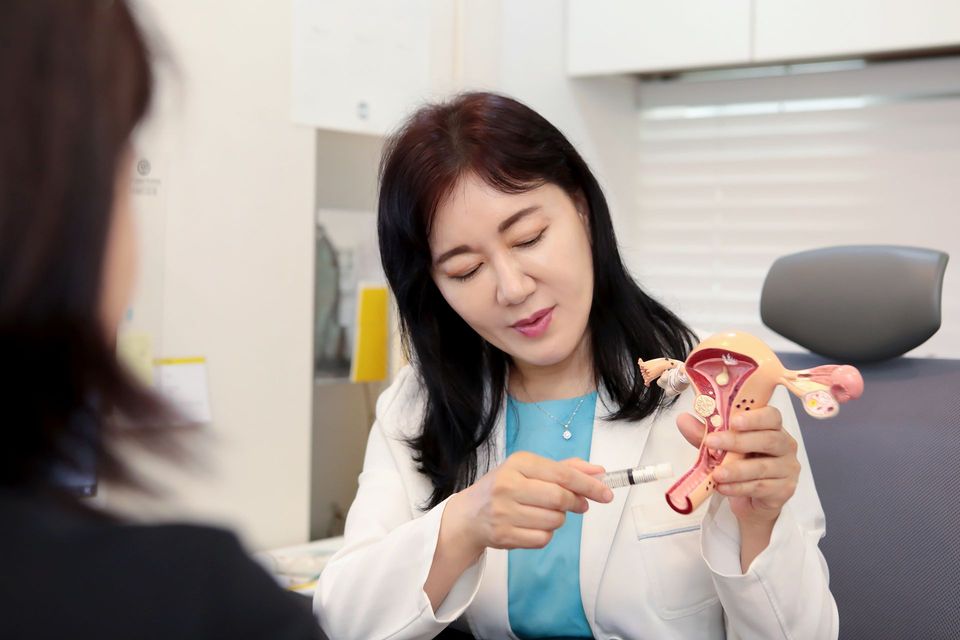
Tubal ligation is surgery that blocks, cuts or removes the fallopian tubes to prevent pregnancy permanently. Tubal reversal is surgery to reconnect the tubes so pregnancy is possible again. At Sinsoe Women's Clinic in Gangnam, Seoul, whether either surgery is available must be confirmed, but a female OB-GYN can talk through your options, including long-acting methods such as Mirena (₩350,000, published fee, June 2026) that work as well without surgery. An English-speaking coordinator helps you ask.
Availability: Tubal ligation and reversal are not confirmed at Sinsoe. Sinsoe does offer long-acting reversible birth control (Mirena, copper IUD and Implanon) and contraceptive counseling; message the coordinator on WhatsApp and a doctor will tell you whether sterilization or reversal is available for you.
In tubal ligation, a surgeon closes the fallopian tubes so the egg and sperm cannot meet. It is usually done by laparoscopy (keyhole surgery) under general anesthesia. Many surgeons now remove the tubes completely, called salpingectomy, which may also lower the risk of some ovarian cancers.
It is meant to be permanent. Periods and hormones do not change, because the ovaries keep working. It does not protect against STDs.
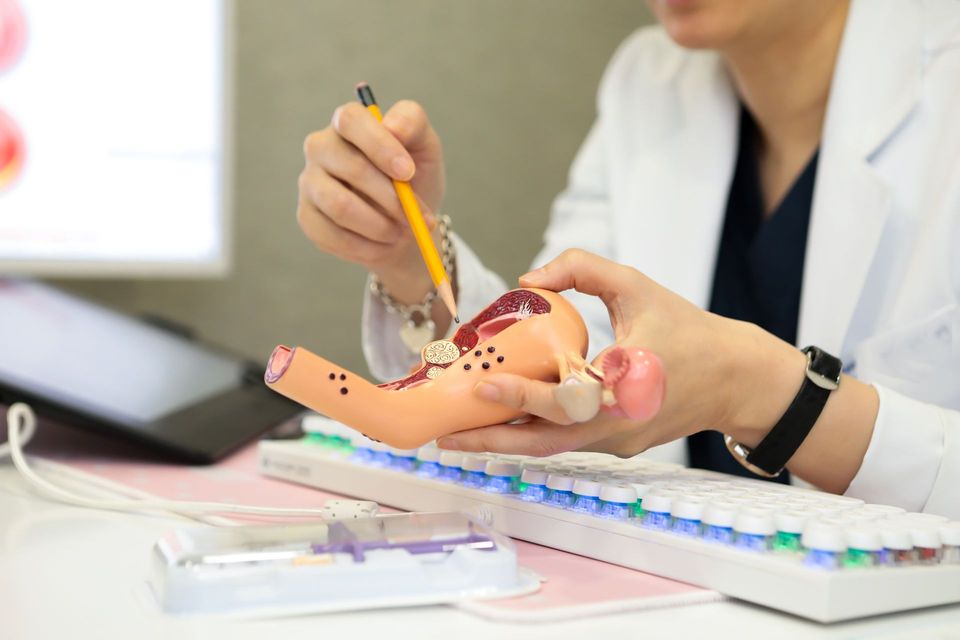
Some women later want another pregnancy. Tubal reversal reconnects the tubes with microsurgery, but it is not always possible, and success depends on age, how the tubes were closed and how much healthy tube is left. IVF is the other route to pregnancy after ligation.
These are general guidelines. A doctor talks through your own situation.
Pregnancy after ligation or reversal has a higher chance of being ectopic. If it is an emergency, go to the nearest hospital emergency room.
These confirmed Sinsoe methods prevent pregnancy about as well as sterilization, and can be removed any time.
A hormonal IUD for several years that often makes periods lighter. Published fee ₩350,000 (June 2026; confirm). See Mirena.
Lighter periodsHormone-free and long-lasting. Published fee ₩280,000. See IUD insertion.
No hormonesA small rod in the arm for about 3 years, with no pelvic exam. Published fee ₩350,000. See Implanon.
No surgery, no examThe first step is a conversation. Nothing is decided on the day unless you want it to be.
Reversal may allow several natural tries at pregnancy, but needs surgery and time for recovery. IVF skips the tubes completely and does not need surgery on them.
Age, ovarian reserve and the type of ligation all affect which route is more likely to work. An infertility work-up helps decide.
Both procedures are surgery. Here are the main points doctors discuss.
Anesthesia risks, bleeding, infection, and rarely injury to the bowel, bladder or blood vessels.
More common when done at a young age or at a stressful time. This is why counseling matters.
Rare, fewer than 1 in 100 women, but a pregnancy after ligation is more likely to be ectopic.
Success varies widely. The tubes can block again, and ectopic pregnancy is more likely.
Permanent surgery needs careful planning, especially away from home.
Start with a consultation and, if you want, a reversible method while you decide.
Laparoscopic surgery needs recovery time before flying. Ask the coordinator what to plan for.
Ask for English copies of any reports, to keep with your records at home.
Sinsoe Women's Clinic is at 537 Nonhyeon-ro, Gangnam-gu, Seoul, a 4-minute walk from Eonju Station Exit 7 (Line 9). All doctors are female, and an English-speaking coordinator helps you from booking to results. Message us on WhatsApp at +82-10-9517-5719.
This is not confirmed. Sinsoe offers long-acting reversible methods (Mirena, copper IUD and Implanon) and contraceptive counseling. Message the coordinator and a doctor will tell you whether sterilization or reversal is available for you.
Yes, it is meant to be. Reversal is sometimes possible but it does not always work, so think of ligation as permanent.
No. Your ovaries keep working, so your hormones and periods stay the same.
IUDs and the implant are more than 99% effective, about the same as tubal ligation, and they can be removed any time.
It varies a lot. Age, the type of ligation and the length of healthy tube left all matter. A surgeon reviews your operation report to estimate your chance.
There is no published fee at Sinsoe because availability is not confirmed. For reversible methods, Mirena is ₩350,000, copper IUD ₩280,000 and Implanon ₩350,000, from the clinic's published fee schedule (June 2026); confirm before your visit.
Yes. Vasectomy for a male partner is a smaller procedure, usually done under local anesthetic. It is also meant to be permanent.
Tell us what you're considering. A coordinator replies in English and a doctor confirms what is available for you.
| Mon & Fri | 10:00 AM – 8:00 PM |
|---|---|
| Tue, Wed, Thu | 10:00 AM – 7:00 PM |
| Saturday | 10:00 AM – 4:00 PM |
| Sunday | Closed |