



Risk factors
- A new partner or more than one partner
- A past STD or PID
- Sex without condoms
- In the first weeks after an IUD insertion, rarely
10 Street Name, City Name
Country, Zip Code
555-555-5555
myemail@mailservice.com
Pelvic inflammatory disease (PID) is an infection of the uterus, fallopian tubes or ovaries, most often caused by bacteria such as chlamydia or gonorrhea that move up from the vagina. At Sinsoe Women's Clinic in Gangnam, Seoul, a female OB-GYN examines you, runs a 12-pathogen STD PCR test and a pelvic ultrasound, and starts antibiotics without delay. Your partner is treated too. An English-speaking coordinator guides you through follow-up.
PID is an infection of the upper reproductive organs: the uterus, fallopian tubes and ovaries. It usually starts as an infection in the vagina or cervix that travels upward.
Common causes are chlamydia, gonorrhea and Mycoplasma genitalium, but other bacteria can also be involved. Some women have strong pain, while others have only mild symptoms and do not realize they are ill.
Early treatment matters. Without it, PID can scar the fallopian tubes, which raises the risk of long-term pelvic pain, ectopic pregnancy and infertility.
PID can happen to any sexually active woman. Some situations make it more likely.
Severe PID or an abscess may need hospital treatment with antibiotics through a drip. Ectopic pregnancy must be ruled out urgently.
There is no single test for PID. Your doctor combines your symptoms, an exam and tests, and starts treatment early.
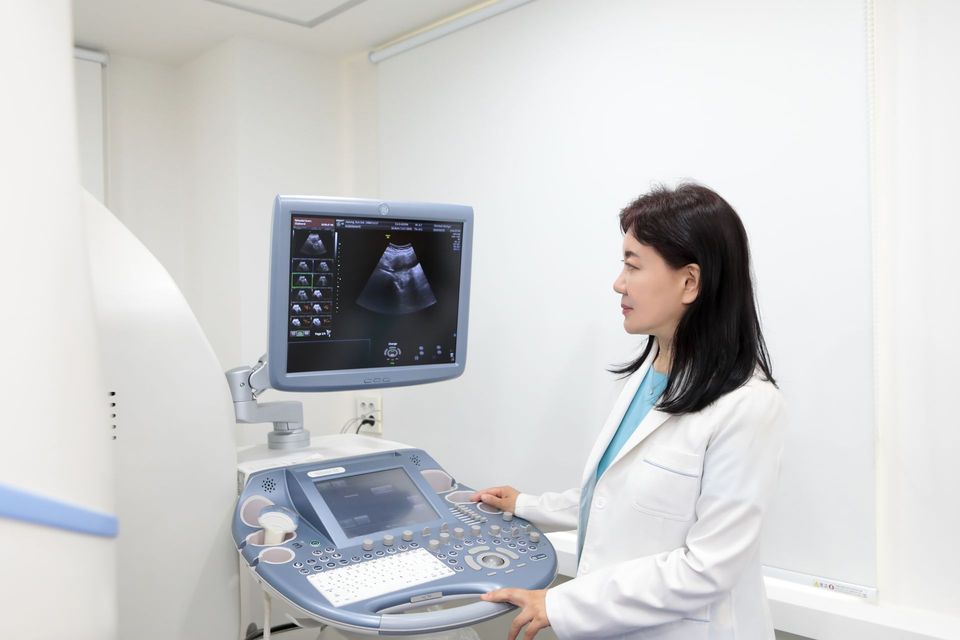
A pelvic exam, STD PCR swab, pregnancy test and blood tests when needed help confirm the infection and its cause.
Confirming the causeA combination of antibiotics that covers the likely bacteria, usually for about 1 to 2 weeks. Most women are treated as outpatients.
Mild to moderate PIDA pelvic ultrasound checks for fluid or an abscess, and a review in a few days checks that you are improving.
Checking for complicationsTreatment usually starts on the day of your visit, before all results are back.
If the cause is an STD, your partner may carry it without symptoms. Treating both of you at the same time stops the infection from passing back.
Your doctor can explain what your partner should do, even if they are in another country.
Most women recover fully when PID is treated early. Here is what to expect.
Pain and fever should begin to ease. If not, your doctor reviews the treatment.
Finish all medicine. A retest for the STD may be advised a few months later.
Scarring of the tubes can cause chronic pelvic pain, ectopic pregnancy or difficulty getting pregnant.
Stomach upset, a yeast infection or sensitivity to the sun. Tell your doctor about any allergy.
PID should not wait until you get home. You can be seen as a self-pay patient.
Bring your Alien Registration Card. We see you again to make sure the infection has cleared.
Bring your passport. Tell us your flight date so your doctor can plan follow-up and medicine for the journey.
Ask for an English medical certificate and receipt for your travel insurer before your visit.
Sinsoe Women's Clinic at 537 Nonhyeon-ro, Gangnam-gu, Seoul diagnoses and treats PID with female OB-GYNs and an English-speaking coordinator. It is a 4-minute walk from Eonju Station Exit 7 (Line 9). Book on WhatsApp at +82-10-9517-5719 or walk in during clinic hours.
PID itself is not passed on, but it is often caused by STDs such as chlamydia or gonorrhea.
It can, especially if it is untreated or happens more than once. Early treatment lowers this risk.
Antibiotics usually last about 1 to 2 weeks. Most women feel better within a few days.
Most women are treated as outpatients. Severe illness, pregnancy or an abscess may need hospital care.
No. Wait until you and your partner have both finished treatment and your symptoms are gone.
The STD 12-pathogen PCR panel is ₩100,000 on the clinic's published fee schedule (June 2026), and a gynecologic ultrasound is ₩100,000. Please confirm before your visit.
Yes. Visitors are seen as self-pay patients. Bring your passport.
Send a message in English about your symptoms. A coordinator replies and helps you be seen as soon as possible.
| Mon & Fri | 10:00 AM – 8:00 PM |
|---|---|
| Tue, Wed, Thu | 10:00 AM – 7:00 PM |
| Saturday | 10:00 AM – 4:00 PM |
| Sunday | Closed |