



Medicine
Anti-inflammatory painkillers, antibiotics for infection, and hormone treatment for endometriosis or adenomyosis. Often the first step.
Most causes10 Street Name, City Name
Country, Zip Code
555-555-5555
myemail@mailservice.com
Pelvic pain management means finding out what is causing pain in your lower belly or pelvis and treating that cause, while easing the pain along the way. At Sinsoe Women's Clinic in Gangnam, Seoul, female OB-GYNs combine a gentle exam, same-day pelvic ultrasound, swab and STD tests and, when the bladder is involved, cystoscopy. Common causes such as endometriosis, fibroids, ovarian cysts, infection and bladder pain can all be treated in the same clinic. An English-speaking coordinator stays with you from booking to results.
Pelvic pain is pain below your belly button and between your hips. It can be acute, starting suddenly over hours or days, or chronic, lasting 6 months or more, either all the time or in a cycle.
In women, the cause is often gynecologic, such as endometriosis, fibroids, ovarian cysts or infection. But the bladder, bowel, muscles and nerves can also cause pain, and sometimes there is more than one cause.
Good pain management starts with a careful history and exam. Your doctor then treats the cause and helps you control the pain, so it no longer runs your life.
When and how it hurts gives your doctor important clues. This is a guide, not a diagnosis.
| Pattern | Possible causes |
|---|---|
| With periods, getting worse | Endometriosis, adenomyosis |
| Pressure, heavy periods | Fibroids |
| One side, sudden or sharp | Ovarian cyst, possibly bursting or twisting |
| With fever or unusual discharge | Pelvic infection (PID) |
| With peeing, bladder fullness | UTI, interstitial cystitis |
| Constant, with tight muscles | Pelvic floor problems |
These may be an ectopic pregnancy, a twisted ovary or a serious infection. Go to the nearest hospital emergency room, then message us on WhatsApp.
Most women get a plan that combines treating the cause with relief for day-to-day pain.
Anti-inflammatory painkillers, antibiotics for infection, and hormone treatment for endometriosis or adenomyosis. Often the first step.
Most causesHIFU or RF ablation for fibroids and adenomyosis, sclerotherapy for cysts, or laparoscopy to diagnose and treat. See laparoscopy.
Structural causesBladder instillation therapy for interstitial cystitis, and pelvic floor exercises or therapy for tight muscles. See pelvic floor therapy.
Bladder, musclesThe first visit focuses on finding the cause. Many women leave with a likely answer the same day.
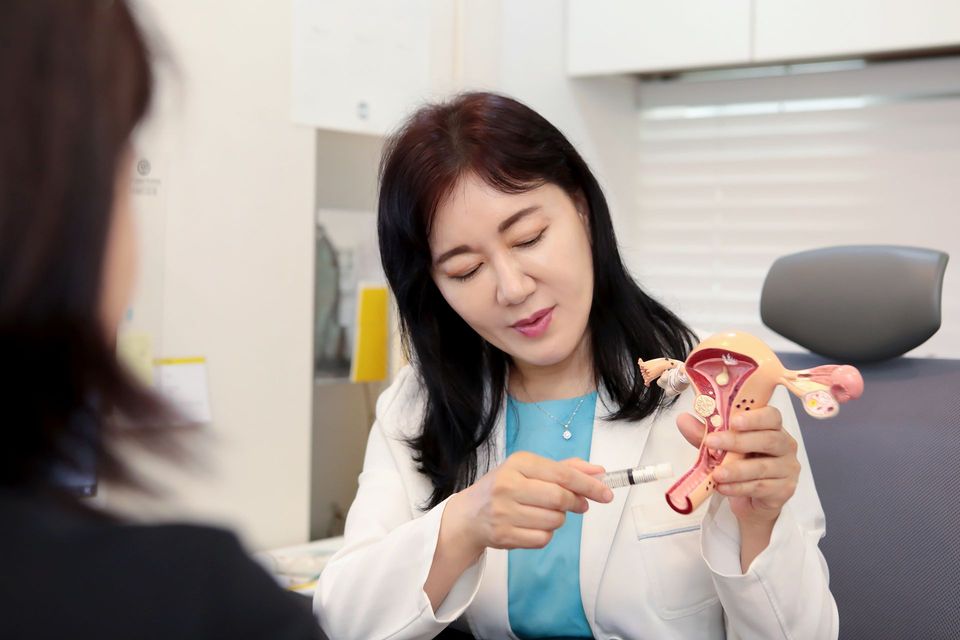
Chronic pelvic pain often has more than one cause, and it can take a few visits to get it right. Your doctor will keep adjusting the plan with you.
Heat, gentle movement, good sleep and stress care help alongside medical treatment.
You only have the tests that make sense for your symptoms.
Shows fibroids, cysts and adenomyosis. See GYN ultrasound.
Finds vaginal infections and STDs such as chlamydia and gonorrhea that can cause PID.
A thin camera looks inside the bladder when bladder pain or interstitial cystitis is suspected.
Keyhole surgery can find endometriosis or adhesions. Like any surgery, it has risks such as bleeding and infection.
Fees from the clinic's published fee schedule (June 2026); confirm before your visit.
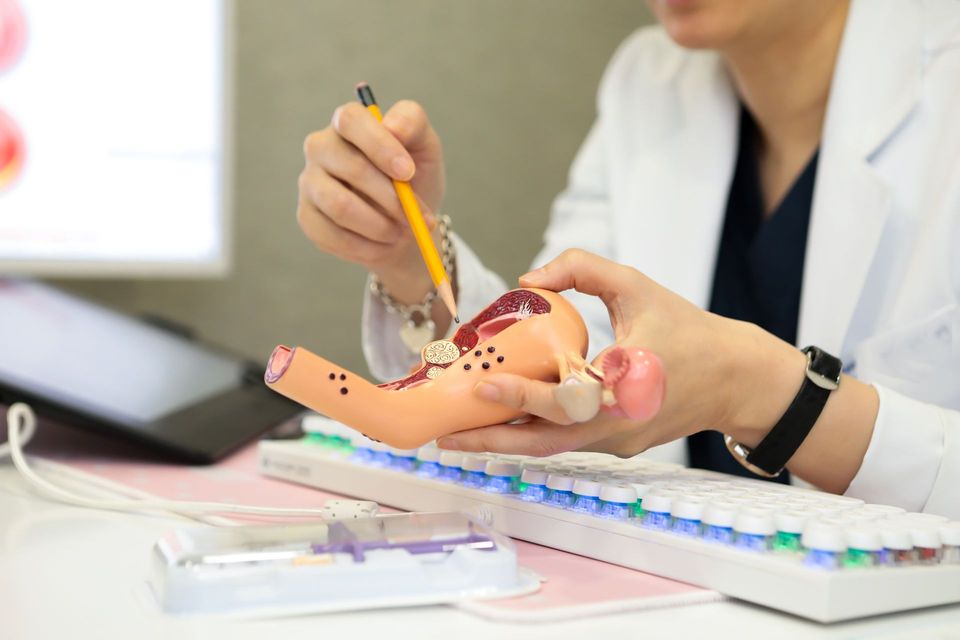
Pain does not wait for you to get home. Here is how we help, whatever brings you to Seoul.
Bring your Alien Registration Card. Chronic pain is easier to manage with the same doctor over time.
Bring your passport. Tell us your travel dates and how severe the pain is, and we try to see you soon.
Ask for an English medical certificate and test results for your travel insurer or doctor at home.
Sinsoe Women's Clinic at 537 Nonhyeon-ro, Gangnam-gu, Seoul treats pelvic pain with female OB-GYNs and an English-speaking coordinator. It is a 4-minute walk from Eonju Station Exit 7 (Line 9). Book on WhatsApp at +82-10-9517-5719.
Sudden severe pain, pain with a positive pregnancy test, or pain with high fever, vomiting or fainting needs an emergency room straight away.
Endometriosis is one of the most common, but bladder pain, fibroids, adhesions, bowel problems and pelvic floor tension are also frequent. Often more than one is involved.
Often. It shows fibroids, cysts and adenomyosis well. It cannot show small endometriosis spots or most infections, so other tests may be added.
Yes. UTIs and interstitial cystitis can feel like pelvic pain. Sinsoe offers cystoscopy and bladder instillation therapy.
It depends on the tests needed. A GYN ultrasound is ₩100,000 and the STD 12-pathogen PCR panel ₩100,000 from the clinic's published fee schedule (June 2026); confirm before your visit.
Yes. Stress can tighten pelvic floor muscles and make pain feel stronger. That does not mean the pain is in your head.
Yes. Visitors pay self-pay. Bring your passport and message the coordinator to book.
Describe your pain in English. A coordinator replies with a time to see a female OB-GYN.
| Mon & Fri | 10:00 AM – 8:00 PM |
|---|---|
| Tue, Wed, Thu | 10:00 AM – 7:00 PM |
| Saturday | 10:00 AM – 4:00 PM |
| Sunday | Closed |